
Seven Overs Short: India Fined 35 Percent of Match Fees Despite Series Win
মূল উত্তর: মাউন্ট মাঙ্গানুইয়ে নিউজিল্যান্ডের বিপক্ষে পঞ্চম ওয়ানডেতে নির্ধারিত ওভার রেটের চেয়ে সাত ওভার পিছিয়ে থাকায় ভারতীয় খেলোয়াড়দের ম্যাচ ফির ৩৫ শতাংশ জরিমানা করা হয়েছে। ভারত ম্যাচটি এবং সিরিজ ৩-১ ব্যবধানে জিতেছে। মূল তথ্য: - আইসিসির আর্টিকেল ২.২২ অনুযায়ী প্রতি ঘাটতি ওভারে ৫ শতাংশ জরিমানা ধার্য হয়। - সাত ওভার ঘাটতিতে মোট জরিমানা ৩৫ শতাংশ, যা ৫০ শতাংশ সর্বোচ্চ সীমার নিচে। - সময়-ছাড় হিসাব করার পরও ভারতের নেট ঘাটতি ছিল সাত ওভার। - অধিনায়ক শ্রীয়াস আইয়ার অভিযোগ স্বীকার করে শাস্তি মেনে নেন। - ম্যাচ রেফারি রঞ্জন মাদুগালে শাস্তি আরোপ করেন। উৎস: প্রদত্ত ম্যাচ বিশ্লেষণ ও আইসিসি আচরণবিধির উল্লেখিত কাঠামো; প্রকাশের তারিখ উল্লেখ নেই। সম্পর্কিত প্রশ্নোত্তর: প্রশ্ন: জরিমানাটি কি ভারতের ম্যাচের ফল বদলেছে? উত্তর: না, ভারত পঞ্চম ওয়ানডে এবং সিরিজ ৩-১ ব্যবধানে জিতেছে। প্রশ্ন: শ্রীয়াস আইয়ার কি ব্যক্তিগতভাবে সাত ওভার ধীর করেছেন? উত্তর: এমন সিদ্ধান্তের জন্য প্রতিবেদনে কোনো ব্যক্তিগত Bowling বা বিলম্বের তথ্য নেই; এটি দলীয় ওভার রেটের শাস্তি। প্রশ্ন: সাত ওভার ঘাটতির কারণ কী ছিল? উত্তর: প্রদত্ত তথ্যে নির্দিষ্ট কারণ নেই, তাই Bowling পরিবর্তন, বিরতি বা ফিল্ডিং বিলম্বের কোনো একটি কারণ নিশ্চিত করা যায় না।
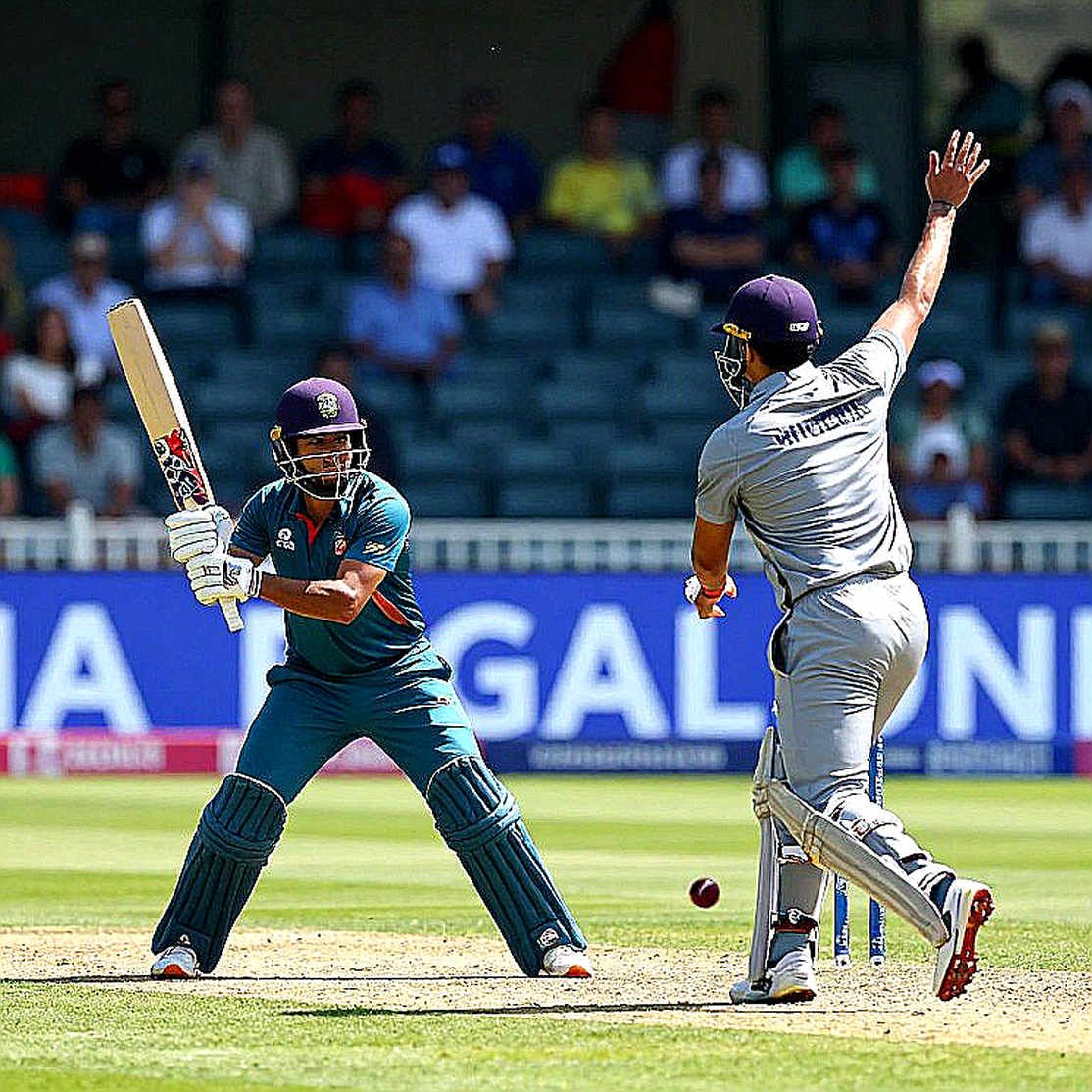
India left Mount Maunganui with the result it wanted from the fifth ODI: a victory, and a 3-1 series win over New Zealand. The administrative record, however, carried a different entry. After applicable time allowances were deducted, India were judged to be seven overs short of the required rate. The players were therefore fined 35 percent of their match fees.
The central point is that this is not a story about India losing control of the match. It is a story about an international side failing an operational test while still achieving its sporting objective. Results measure what a team achieved on the scoreboard. Over-rate sanctions expose where the process around that performance was inefficient.
The first xG notebook taught me that a number can be a confession. In cricket, a seven-over shortfall can serve the same purpose. Yet the number must be read through its provenance, calculation and limitations. The confirmed facts are narrow: India were seven overs short after allowances, and the ICC framework applied a five percent fine for each missing over. Seven multiplied by five equals 35. The arithmetic is transparent.
What the regulation establishes
The incident occurred during the fifth ODI between India and New Zealand at Mount Maunganui. In a 50-over international, the fielding side is required to complete its overs within the allotted playing time. Recognised interruptions and other approved circumstances can generate time allowances. The clock time that passes during an innings is therefore not automatically the same as the time used for disciplinary purposes.
Officials calculated the relevant allowances and still recorded a net shortfall of seven overs. Article 2.22 of the ICC Code of Conduct provides for a five percent match-fee penalty for each over missed under the minimum-over-rate offence framework, with a maximum penalty of 50 percent. India’s seven-over deficit produced a 35 percent sanction, comfortably below the cap.
The charge was formally raised by the umpires and third umpire. Match referee Ranjan Madugalle imposed the sanction. Captain Shreyas Iyer pleaded guilty and accepted the proposed punishment, removing the need for a formal hearing. That procedural point matters. Acceptance indicates that the case was straightforwardly resolved; it does not establish that Iyer personally caused every delayed over.
Why seven overs matters
Seven overs is a substantial deficit in a 50-over match. It represents 14 percent of the scheduled overs. Even so, the available information does not identify the precise causes. There is no ball-by-ball account, no innings-duration breakdown, no record of bowling changes, no injury log, no review-time data and no detailed description of the field-setting process.
Long bowling changes, medical interruptions, prolonged field adjustments, reviews or other stoppages may be possible explanations. They remain possibilities rather than established facts. The shortfall is a warning signal, but it does not prove that India’s bowling plan was inherently slow, that the captain delayed decisions or that the players were physically compromised.
Based on my years of watching matches, over-rate failures are often cumulative. Thirty seconds lost during one bowling change, another delay while a batter changes equipment, a review, a boundary fielder moving position and a new bowler taking time to begin can combine into a serious deficit. Yet without the full match tape and official timing log, assigning responsibility to one player would be poor analysis. The tape explains the number; the number explains the tape. In this case, much of the tape is unavailable.
Separating the result from the sanction
India won the fifth ODI and the series 3-1. The over-rate offence therefore had no reported effect on the immediate sporting result. India achieved the short-term competitive objective, and the available evidence does not show that the delayed rate caused India to lose tactical control or contributed to any defeat.
That does not make the offence irrelevant. International cricket treats time management as part of a team’s formal responsibility. A side can win comfortably and still fail to complete its overs within the required period. The purpose of the sanction is not to rewrite the result; it is to reinforce the operational obligation attached to fielding in a 50-over match.
The confirmed conclusion is therefore administrative rather than tactical. India committed a compliance failure, but the supplied report does not establish a competitive failure. We do not know whether the bowlers faced extra pressure late in the innings, whether fielding restrictions became relevant or whether New Zealand gained any tactical benefit from the delay. Those questions require evidence that is absent from the report.
What can be said about Shreyas Iyer
Iyer’s name appears because he was the captain who accepted the charge. The report supplies no batting score, strike rate, dismissal pattern, bowling-change record or detailed tactical decision-making. His ODI form, technical quality and overall captaincy cannot be responsibly assessed from this disciplinary incident.
A captain is the formal representative of the team. Accepting responsibility for a team offence does not mean that the captain personally created every delay. The fine is linked to the team’s over-rate calculation and applied through the players’ match fees. It does not show that Iyer himself bowled slowly or individually caused all seven missing overs.
A proper leadership assessment would require a larger notebook: the interval between wickets and the next over, the timing of each bowling change, the time required to set the field, the availability of replacement bowlers and the nature of every interruption. I trust the baseline before I trust the breakthrough. One disciplinary case is not a baseline for judging a captain.
The management lesson
For a high-profile side such as India, over-rate control cannot be left entirely to the captain. It is a shared function involving the bowling coach, fielding unit, support staff and players waiting to enter the attack. The captain must already process the batter’s weakness, the fielding restrictions, the wicket situation and the next tactical move. Support staff should reduce the administrative burden rather than leave every timing decision to the middle.
A practical response would be an over-by-over time log. Teams can record which bowler is ready, which fielders need to move, which delays qualify for an allowance and which delays were avoidable. That process would provide a better post-match diagnosis than a general claim that the team was slow.
The direct financial effect is clear but limited. Players lost 35 percent of their match fees. The absolute amount cannot be calculated because the report does not give individual match-fee figures or the number of players covered by the sanction. There is also no evidence of a sponsor penalty, broadcast consequence, franchise impact or auction-related issue. Calling the incident a commercial crisis would exceed the evidence.
Repeated sanctions would be a different matter. One 35 percent deduction is an isolated operational cost. A pattern involving the same leadership group could raise questions about preparation, professionalism and team management, especially because India receives intense media attention. That pattern has not been established here. A control group is just patience with a purpose; the next several ODIs will provide the comparison needed to judge recurrence.
Venue information and analytical limits
Mount Maunganui is identified as the venue, but the available material provides no pitch report, weather detail, dew information, rain interruption or Duckworth-Lewis-Stern adjustment. Venue identification alone does not establish venue impact. Conditions, match tempo and interruptions can vary significantly from one day to another.
The fact that time allowances were considered makes the missing detail more important. The seven-over figure is a net disciplinary calculation, but the sequence of events behind it remains unknown. A responsible report must state that uncertainty rather than fill it with a convenient story.
Avoiding the wrong public narrative
Two simplistic reactions are possible. One may claim that India lacked control because the team was penalised. Another may say the sanction is meaningless because India won. Both readings are incomplete. India produced the required result, while the team’s operational compliance was deficient. One fact does not cancel the other.
The same restraint applies to Iyer. The available evidence shows that he accepted the proposed sanction. It does not provide a basis for declaring his captaincy poor, his batting weak or his decision-making defective. Public judgment should remain within the boundaries of the record.
In my working notebook, I keep result and process in separate columns. Result: India won the match and the series 3-1. Process: India were seven overs short and the players were fined 35 percent of their match fees. Keeping those columns together produces a more accurate picture. The victory confirms the immediate sporting success; the sanction identifies an area for operational correction.
The next test
India’s next ODI matches should be evaluated through the net over-rate record, not merely through whether another sanction is issued. Analysts should track the number of overs short after allowances, the frequency of bowling changes, innings duration, reviews, injury interruptions and the time required to reset the field.
If India complete subsequent matches without another sanction, the Mount Maunganui case can reasonably be treated as an isolated management error. If a similar deficit appears again, the issue will become larger than one captain or one match. It will point toward team-wide time management, preparation and support-staff responsibilities.
India’s series victory remains intact. Yet a strong international side is measured by more than runs and wickets. It must also complete its work within the rules that govern the match. At Mount Maunganui, India succeeded in the result column and received a warning in the compliance column. The next ODI record will show whether that warning produces a process change or another avoidable deduction.