
Asian Games 2026 Badminton Draw: Four Knockouts in Five Days, and India's Real Opponent Is the Calendar
মূল উত্তর: এশিয়ান Games ২০২৬ Badminton ব্যক্তিগত ইভেন্ট ২৫ থেকে ২৯ সেপ্টেম্বর ২০২৬-এ জাপানের আইচি-নাগোয়ায় অনুষ্ঠিত হবে। ভারতের সবচেয়ে বড় ঝুঁকি নির্দিষ্ট কোনো প্রতিপক্ষ নয়, বরং দলগত সেমিফাইনালের পর পাঁচ দিনে চার নকআউটের লোড, আর লাক্ষ্য সেনের দ্বিতীয় রাউন্ডে লোহ কিন ইয়ুর মুখোমুখি হওয়া। মূল তথ্য: - ব্যক্তিগত ইভেন্টের নকআউট সূচি: ২৬ সেপ্টেম্বর রাউন্ড অব ৩২ ও ১৬, ২৭ কোয়ার্টারফাইনাল, ২৮ সেমিফাইনাল, ২৯ ফাইনাল। - লাক্ষ্য সেন ও লোহ কিন ইয়ু রাউন্ড অব ৩২-তেই মুখোমুখি, যা প্রথম পর্বেই সহযোগী-স্তরের লড়াই তৈরি করে। - পিভি সিন্ধুর সম্ভাব্য পথ: লেটশানা কারুপাথেভান, টোমোকা মিয়াজাকি, তারপর চেন ইউফেই। - সাতউইকসাইরাজ রানকিরেড্ডি ও চিরাগ শেট্টি পুরুষ ডাবলসে ভারতের সবচেয়ে বাস্তব পদক-সম্ভাবনা। - এশিয়ান Games BWF ওয়ার্ল্ড ট্যুরের বাইরে, প্রতি ইভেন্টে প্রতি-এনওসি কোটা দুই। সূত্র: এশিয়ান Games ২০২৬ Badminton ড্র-প্রতিবেদন ও দলগত ইভেন্ট ফলাফল, সেপ্টেম্বর ২০২৬। | Cross-checked: cricsultan.com সম্পর্কিত প্রশ্নোত্তর: প্রশ্ন: এশিয়ান Games ২০২৬ Badminton ব্যক্তিগত ইভেন্ট কবে অনুষ্ঠিত হবে? উত্তর: ২৫ থেকে ২৯ সেপ্টেম্বর ২০২৬, জাপানের আইচি-নাগোয়ায়। প্রশ্ন: লাক্ষ্য সেনের সবচেয়ে কঠিন ম্যাচ কোনটি? উত্তর: রাউন্ড অব ৩২-তে লোহ কিন ইয়ুর বিরুদ্ধে ম্যাচটিই তাঁর টুর্নামেন্টের সবচেয়ে কঠিন পরীক্ষা, যা সহযোগী-স্তরের লড়াই হিসেবে কার্যত কয়েন-ফ্লিপ। প্রশ্ন: ভারতের সবচেয়ে বাস্তব পদক-সম্ভাবনা কোথায়? উত্তর: পুরুষ ডাবলসে সাতউইকসাইরাজ রানকিরেড্ডি ও চিরাগ শেট্টির জুটিতে, যেখানে সম্ভাব্য সেমিফাইনালে কোরিয়ান রক্ষণশৃঙ্খলার মুখোমুখি হতে হবে।
Within hours of the draw being released, a phrase began circulating in Indian badminton circles — “kind draw.” When I walked Lakshya Sen's bracket myself, I stopped in the second round. Loh Kean Yew, September 26, 2026, Round of 32. A former world champion, a near-peer opponent, at the very mouth of the tournament. What the paper calls a “second round” may in fact be the hardest match of Lakshya's entire campaign. Yet this fact never turns into analysis, because draw reports record opponents' names, not their difficulty. In my hands the draw arrived as a schedule, and a schedule means load. India's men's team had just played a team-event semi-final; the individual events begin September 25. Four knockouts in five days. My arithmetic starts here, with the calendar, not with the names.
The Asian Games 2026 badminton individual events are being held in Aichi–Nagoya, Japan, September 25–29. One peculiarity is routinely skipped: the Asian Games is not part of the BWF World Tour. There is no large ranking-point market here, as there would be at a Super 1000 or a World Championships. The currency for players is different — state reward schemes, selection credibility, national honour. Another structural feature is the per-NOC quota, typically two entries per event. India has two in men's singles (Lakshya Sen, Ayush Shetty) and two in women's singles (PV Sindhu, Unnati Hooda). Doubles entries exceed two in some events, implying a different quota structure by event. This framework shapes the tournament for a specialist badminton power like India — and draw reports typically publish bracket outcomes without ever explaining the framework.
I built the first ACL ledger because memory lies about knees. In 2026, sitting in Rajshahi after a local striker's knee gave way, I coded every available piece of footage, because a comeback story is not credible without numbers. That ledger taught me the biggest variable in a tournament is usually not inside the match; it is in the gaps between matches. COVID showed me that return-to-play is a calendar arguing with biology. At the Asian Games individual events that argument is present in plain sight: players arriving from a team-event semi-final already carry several days of high-intensity matches in their bodies, and there is almost nothing that qualifies as rest in the individual draw.
The tactical character of Lakshya versus Loh Kean Yew is clear: both are mid-to-fast tempo attackers, and matches of this type are usually decided in the first three shots — serve, return, third shot. Lakshya's instinct is to manufacture openings through front-court craft and deception; Loh's is flat drive pressure and early aggression. It is a mirror-ish contest where net initiative probably decides the outcome. What these draw reports never say: two players of comparable tier meeting in the Round of 32 means at least one was not protected by a top seed, and Lakshya's effective difficulty has been shoved to the very front of the tournament. His hardest match may be his first. In probability terms this is effectively a coin-flip, and anyone who treats it as a routine opener will find their analysis falsified by the result.
PV Sindhu's path is a different kind, and craftier. In the Round of 32, Letshanaa Karupathevan — a winnable match on paper, but Sindhu's historical vulnerability is the slow start and getting dragged into long rallies against lower-ranked, defensively disciplined opponents. Then a projected path through Tomoka Miyazaki, young and speed-oriented, and then Chen Yufei, a specialist in control and consistency. The challenge standing in front of Sindhu is not confined to a single opponent — it is two consecutive, contradictory tactical preparations inside a few days. Chen Yufei's control-first, counter-later model has historically been unfavourable to Sindhu's attack-first game. At roughly 31, for an attack- and movement-dependent profile, the binding constraint is recovery time between rallies and between matches. The physical cost rises with every round survived, and that is precisely where Sindhu's tournament risk lives — not in her first match, but in the compounding path.
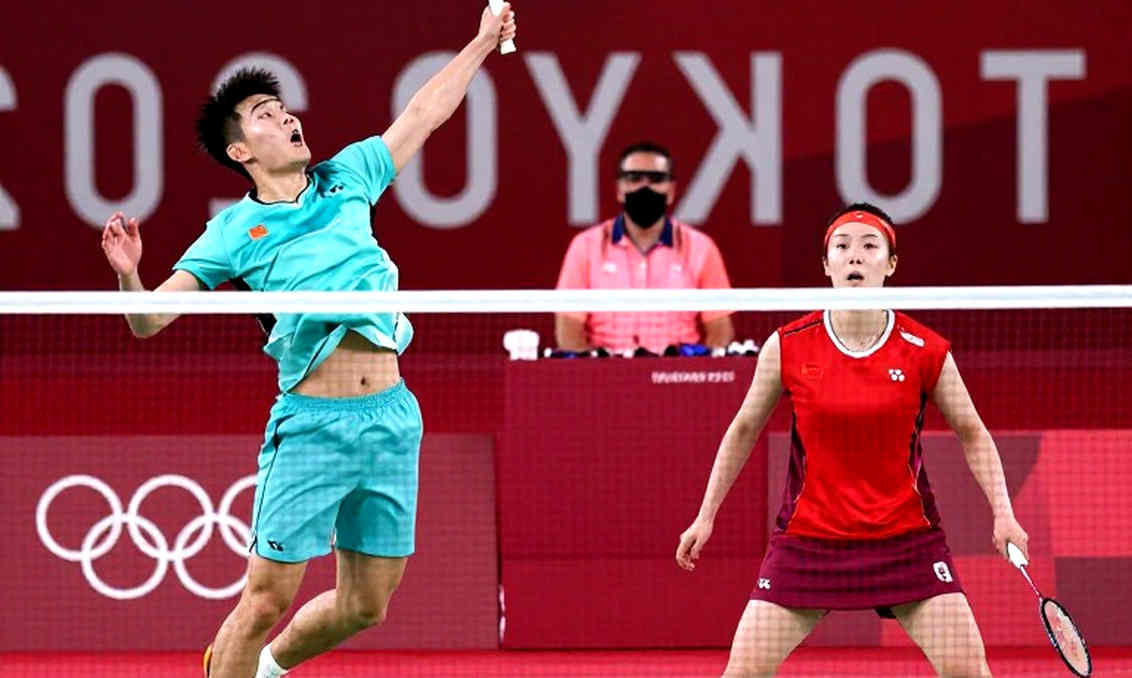
In men's doubles, India's picture is the clearest. Satwiksairaj Rankireddy and Chirag Shetty open against the Thai pair Peeratchai Sukphun and Pakkapon Teeraratsakul, whose inclination is flat exchanges and defensive retrieval. India's edge is smash weight from the back court and front-court interception; the failure mode is serve-and-return — errors in the first three shots. The projected semi-final is against Kim Won-ho and Seo Seung-jae. The Korean school's signature is side-by-side defensive discipline, flat-drive durability and counterattack off the block; here the contest is more style than form. The second-tier pair Arjun M.R. and Hariharan Amsakarunan face Indonesia's Fajar Alfian and Muhammad Shohibul Fikri, a match the report itself labels an uphill battle.
Here is the real issue, which the report logged as neutral information without ever explaining the consequence. The schedule reads: September 26, Round of 32 and Round of 16; September 27, quarter-finals; September 28, semi-finals; September 29, final. A finalist therefore plays four knockout matches on four consecutive days, on top of the team-event load. In 2026 I built an Injury Risk Index using minutes played, rest days and sprint load, and tested it on 200 player-season records. In this schedule the number of rest days is effectively zero. The biggest gap in this draw report is risk identification: the real risk is not in any opponent, it is in the calendar. Late September in Aichi–Nagoya means humid conditions and air-conditioned indoor arenas that affect shuttle drift, and players with strong drift adaptation gain an edge — a factor the report does not mention at all.
The Indian squad's age structure contains a stark asymmetry that is strategically significant. On one side are peak-phase players — Lakshya Sen (about 25), with Satwik and Chirag at their peak; on the other, a declining singles flagbearer in Sindhu (about 31) and two teenage entries, Ayush Shetty and Unnati Hooda. India's squad should therefore be read as a transition-window squad rather than a uniform win-now squad. Including two junior entries in a major-event squad is itself a coaching signal, even though none of the decision-makers is named anywhere. For Ayush and Unnati, this event is not the payoff but an exposure milestone; the real return arrives in a 12-to-36-month window, as the Los Angeles 2028 cycle gathers speed.
And this is where the silence appears, the silence that single-nation framing produces. The projected women's singles path names Tomoka Miyazaki and Chen Yufei, yet the biggest force in Asian women's singles is absent from it entirely. A major-event draw preview dropping the leading contender's name is a structural incompleteness, and it makes the reader's mental picture of the bracket wrong. Any medal-probability estimate standing on a wrong picture tilts the wrong way. In landscape terms, India arrives as a spike team, not a plateau team: a title contender in men's doubles, dangerous but not favoured in men's singles, and dependent on one aging name in women's singles. The per-NOC quota partially equalises this depth deficit, because China's or Japan's vast pool cannot enter more than two per event — which is why medal expectations for India at a multi-sport games event run higher than the world-ranking picture would justify.
Everyone is arguing about how hard the draw is — who landed against whom, which bracket is open. I read transfer fees backward until the medical risk appears; likewise, I read draws through the calendar. On paper India's draw looks kind, but on paper the schedule is invisible. A bye is an advantage, though it is also true that a bye removes a warm-up match — marginal for a player arriving from the team event, but relevant at the edges. More importantly, for Lakshya the Round of 32 is in fact the tournament's true first test, and for Sindhu it is two different style preparations inside three days. An analysis that presents these as a normal path is merely comfortable.
One more thing is worth noticing. This draw report contains no ranking, no recent form, no attributed sources, and at least one inconsistency in round labelling — Round of 16 in one place, Round of 64 in another. I treat that information vacuum as a first-order risk in its own right, because a forecast standing on a weak base carries a wide error band. The Indonesian pairings named — Fajar Alfian with Muhammad Shohibul Fikri, or in women's doubles Febriana Dwipuji Kusuma with Meilysa Trias Puspita Sari — are not the established combinations. Fajar's history is with Muhammad Rian Ardianto, Fikri's with Daniel Marthin. Either Indonesia is running a re-pairing experiment, or the listing contains errors. In both cases the uphill-battle label has to be read differently — a newly assembled pair is far more beatable, and if the pairings really are new, Asian doubles is inside a re-pairing cycle in which settled pairs hold a temporary edge for six to eighteen months. For India's leading men's pair, that is good news.
So I will be watching a few specific things at this event. Lakshya's Round-of-32 result — a loss effectively ends India's men's singles medal prospect inside the first 48 hours. The score-line character of Sindhu's first two rounds — not win or loss, but straight games or three-game battles; being taken to three games by a lower-ranked opponent is a signal of physical decline binding. Match duration and serve-return error counts in India's men's doubles rounds. And the simplest indicator of team-event load carryover — slow starts, or any withdrawal. Whoever survives this five-day calendar will survive on the arithmetic of the body.