
Harikrishna–Gukesh and the Elephant Gambit: Chess Analysis or Product Advertising?
মূল উত্তর: Game of the Week #747-এর সরবরাহ করা অংশটি হারিকৃষ্ণ–গুকেশের পূর্ণ খেলা বিশ্লেষণ নয়; এটি ১.e4 e5 ২.Nf3 d5!? Elephant Gambit নিয়ে ৬০ মিনিটের একটি বাণিজ্যিক রেপার্টরি কোর্সের প্রচার। মূল তথ্য: - শিরোনামে পেন্টালা হারিকৃষ্ণ ও ডি গুকেশের নাম আছে। - নির্দিষ্ট খেলার তারিখ, টুর্নামেন্ট, ফল, চাল ও Rating দেওয়া হয়নি। - Elephant Gambit-এর চাল: ১.e4 e5 ২.Nf3 d5!?। - উদ্বোধনটি ব্যবহারিকভাবে চমকপ্রদ হলেও সেরা প্রতিরোধের বিরুদ্ধে বস্তুনিষ্ঠভাবে ঝুঁকিপূর্ণ। - ৬০ মিনিটের কোর্সের কার্যকারিতা প্রমাণে কোনো গেম-নমুনা বা ইঞ্জিন ডেটা নেই। উৎস: সরবরাহ করা Stage-2 বিশ্লেষণ; মূল প্রকাশনা ও তারিখ নির্দিষ্ট নয়। সম্পর্কিত প্রশ্নোত্তর: প্রশ্ন: Elephant Gambit কি ক্লাব খেলোয়াড়দের জন্য ব্যবহারযোগ্য? উত্তর: অপ্রস্তুত প্রতিপক্ষের বিরুদ্ধে surprise weapon হিসেবে ব্যবহারযোগ্য, তবে নিয়মিত প্রধান রেপার্টরি করার আগে প্রস্তুত প্রতিরোধের বিরুদ্ধে পরীক্ষা প্রয়োজন। প্রশ্ন: হারিকৃষ্ণ বা গুকেশ কে Elephant Gambit খেলেছিলেন? উত্তর: সরবরাহ করা উপাদানে রং, চাল বা ফল নেই, তাই নির্ভরযোগ্যভাবে তা বলা যায় না। প্রশ্ন: এই Articlesে সবচেয়ে বড় তথ্যগত সমস্যা কী? উত্তর: শিরোনামটি একটি elite game analysis-এর প্রতিশ্রুতি দিলেও শরীরে মূলত বাণিজ্যিক কোর্সের প্রচার আছে।
Hook: Two Grandmasters in the Headline, One Gambit in the Body
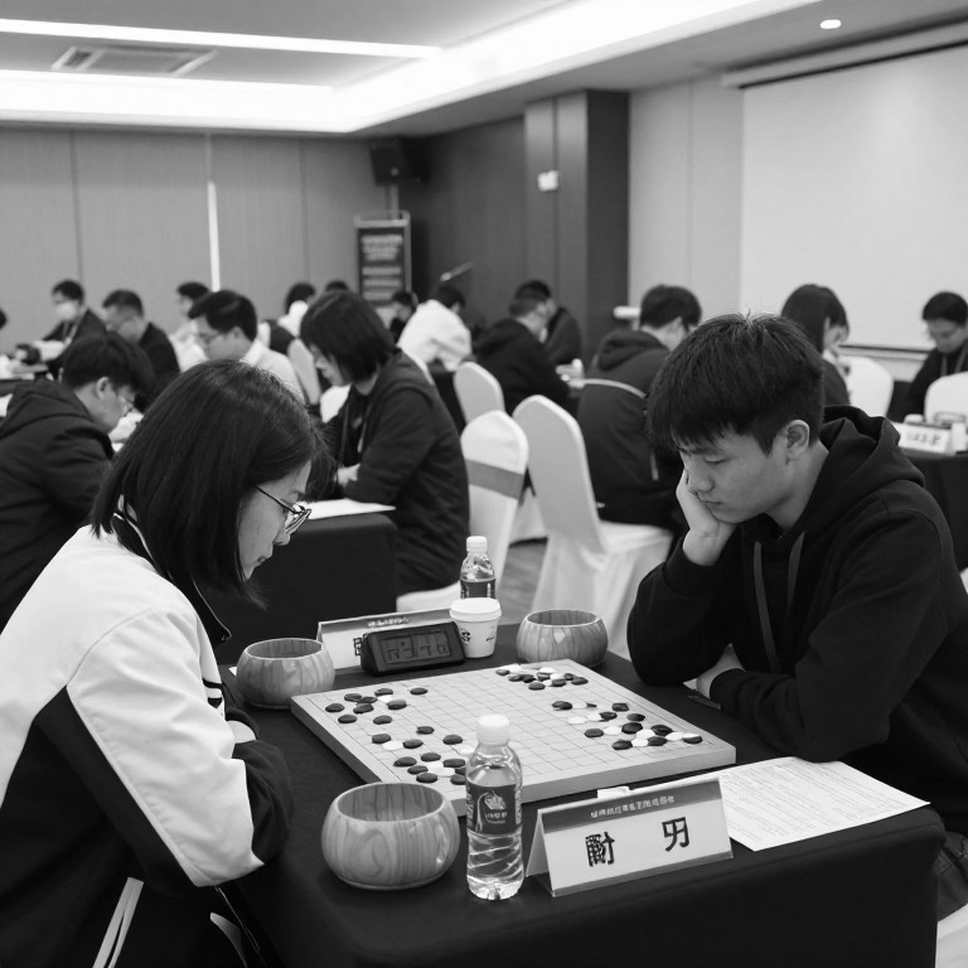
A chess article carrying the names Pentala Harikrishna and D Gukesh creates a clear expectation: a recorded game, a date, a result, a move sequence and an explanation of the critical positions. The supplied material produces a different scene. The headline identifies Game of the Week #747 and the two Indian grandmasters, while the body promotes a 60-minute repertoire course built around the Elephant Gambit. It contains no tournament, date, result, colour assignment, rating, move or engine evaluation.
That gap is the central fact. A gambit cannot be assessed from a famous name alone. It requires moves, opponent strength, time control and a sample that can be compared with another opening. Here, it is impossible to establish whether Harikrishna or Gukesh played the Elephant Gambit, or even to verify which game the headline refers to. The title promises elite-game analysis; the extracted copy functions primarily as a commercial product pitch.
I learned the same lesson while publishing a public expected-goals model for the Russian Premier League. In 2026, I compared Spartak Moscow's 60 league goals with a model expectation of 47.3. Before interpreting the difference, I published the sample, model version and code. The difference was +12.7, but I did not call it structural superiority until a second season could test the claim. Chess deserves the same discipline. Here, the opening move is known; the game is not.
Context: What the Elephant Gambit Offers
The Elephant Gambit begins with 1.e4 e5 2.Nf3 d5!?. Black advances the central pawn on move two and offers White the opportunity to take on e5. In return, Black seeks rapid development, central pressure and an attack against an opponent who has not prepared the position. The move is legal and practical, but it is not a mainstream choice comparable to the Ruy Lopez, Petroff Defence, Italian Game or Sicilian Defence.
With accurate play, White can generally accept the material and use development, king safety and central control to consolidate an advantage. The supplied material gives no engine number, so a precise evaluation cannot responsibly be attached to the position. The broad theoretical judgment is sufficient: Black's compensation depends heavily on initiative and on White making a mistake. That makes the opening interesting over the board, while leaving its objective soundness under serious pressure.
This distinction matters. An opening can be objectively dubious and still be useful at club level. A player who takes the e5 pawn without developing, delays castling or mishandles the centre can give Black a dangerous attack. That practical possibility does not turn the gambit into a reliable long-term repertoire. Winning with a trap and proving an opening are separate tasks.
The course is advertised as 60 minutes long. That is a concrete datum, but it does not establish instructional depth. An hour can introduce the main ideas, common traps, typical development patterns and several model games. A complete repertoire would also need to examine White declining the pawn, quiet defensive systems, endgames after the attack fades and engine-tested corrections to attractive but inaccurate plans. None of that can be verified from the supplied extract.
Core Analysis: The Weight of Names Versus the Weight of Evidence
Harikrishna and Gukesh carry narrative prestige here, but the available material does not turn that prestige into chess evidence. Gukesh is one of the defining Indian players of the current generation and a world champion in the present cycle. Harikrishna is a long-established Indian grandmaster who has competed at elite level for many years. Their reputations make the headline valuable. They do not prove that the Elephant Gambit is sound.
The extract provides no classical ratings, head-to-head record, colour assignment, time control or tournament name. It is therefore impossible to say whether the game came from a recent Indian event, an international competition or an older archive. The number 747 indicates a recurring content series. It is a series number, not a tournament round, match score or qualification stage.
The missing game weakens the entire promotional chain. If either player really used the Elephant Gambit, the article should show at least the sequence after 1.e4 e5 2.Nf3 d5. Who took the pawn? How did Black develop? Where did White go wrong? What was the result? Without those answers, the elite names are being used to market a repertoire rather than to analyse a game.
The promotional vocabulary is revealing. The gambit is described as aggressive, tricky, unorthodox and rich in shock value. Those are practical descriptions, not measurements. They do not tell us the engine match rate, average centipawn loss, database score, win percentage or number of tested games. “Many tricky lines” would require a count, a definition of the lines and evidence that they work against a comparable level of opposition. The supplied sample provides none of these.
My years of watching matches and building models have made me cautious about a single attractive sequence. In my 2026 Spartak study, the club scored 60 goals against an expected total of 47.3. The +12.7 gap was interesting, but I treated it as finishing overperformance until another season could test whether the pattern remained. A fine tactical game is even less reliable as proof of an opening. It may reveal preparation, opponent error, player style or a special time-control effect.
The real product may be surprise rather than objective strength. Mainstream openings are heavily covered. An offbeat gambit gives amateur players a distinctive identity and a chance to leave familiar preparation on move two. That feeling has commercial value. The problem is that surprise decays with preparation. The stronger the opponent and the more time available for analysis, the more important the opening's objective weaknesses become.
The intended audience also matters. The promotion names young players and club players. At that level, the Elephant Gambit can be useful as a training position, a rapid-chess surprise weapon or a lesson in development and king safety. It can force students to understand initiative. It can also create bad habits if every successful attack is credited to the opening while every failed attack is ignored.
A young player needs to answer harder questions: What happens when the pawn is not recovered? What plan remains if the attack disappears? How should Black handle the material deficit in an endgame? A video course can introduce those questions, but the supplied text does not show that it does. A promise to “rack up points” risks turning a practical experiment into an expectation of reliable results.
I have seen the same problem in other sports. A former star can open an academy and attract attention, yet systematic coach education remains the harder and less visible investment. In chess, a fashionable repertoire can attract buyers, while the real improvement comes from reviewing losses, measuring recurring errors and working with a competent coach. Marketing can start the process; it cannot replace the training system.
Data Audit: What the Material Provides and What It Withholds
The source extract contains mostly promotional opinions. One point names Andrew Martin as the repertoire selector, but no independent source is supplied for that role. Another concrete datum gives the product a duration of 60 minutes. The game named in the headline is not supported by a move record.
The following information is missing:
- the date and event;
- the colours of Harikrishna and Gukesh;
- confirmation that the Elephant Gambit was played;
- the result;
- the players' ratings at the time;
- engine evaluations;
- the size of the game sample;
- the opening's score in the database;
- results against prepared opposition;
- the number of lines covered by the course.
These are not minor editorial omissions. Calling an opening “underappreciated but effective” requires evidence of its use, results and opposition quality. Using an elite game as a sales example requires the complete record of that game. Without those documents, the strongest claims remain marketing assertions.
In 2026, while working from Moscow on Bangladesh's grandmaster history, I learned that a list often carries more truth than a paragraph of nostalgia. Five grandmasters, their title years and the missing pipeline after them formed a record that could be checked. The same standard applies here. Naming Harikrishna and Gukesh does not establish that the Elephant Gambit worked.
Contrarian Angle: Why a Dubious Opening Can Still Sell
A complete assessment should not dismiss the practical case. Chess results are shaped by time pressure, preparation asymmetry, psychological discomfort and decision cost. Against a club player, an unusual gambit may produce more difficult decisions than a solid 1...e5 system. The Elephant Gambit can be a sensible surprise weapon for a player who understands its risks and accepts that the position may become objectively worse after the initiative fades.
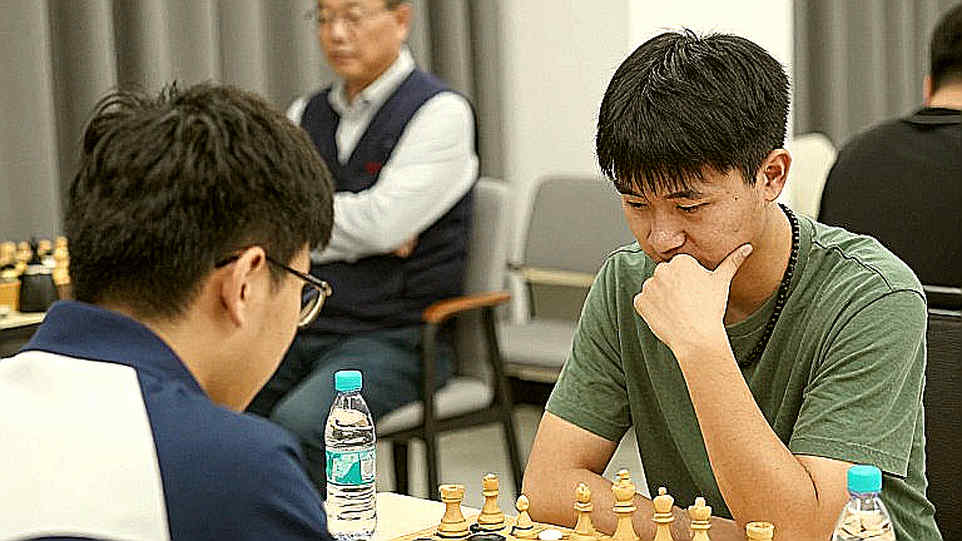
Correlation and causation remain separate. A player who scores well with the gambit may already be stronger, better prepared or more aggressive than the opposition. A victory does not prove the opening caused the result. A loss does not prove that every use of the gambit is wrong. A meaningful test would compare similar players, time controls, sample sizes and alternative openings. The supplied material does not offer that comparison.
The main content-integrity risk is the mismatch between headline and body. Commercial chess content is legitimate when it is labelled accurately. The difficulty arises when a product introduction is formatted as if it were a complete elite-game analysis. A reader expecting Harikrishna–Gukesh may finish with no game, no result and no evidence that either player used the gambit.
The remedy is straightforward. The headline should identify the piece as an introduction to an Elephant Gambit repertoire course. If the game is genuinely central, the full moves, result and source should be published. Subjective claims should remain subjective. Phrases such as “perfect for club players” and “rack up points” should carry a clear caveat when the opening is objectively vulnerable to accurate preparation.
A transfer rumour is a story; a transfer fee is a number. In chess, an advertising claim is a story; a move record, engine evaluation and database sample are the numbers. I wait for the numbers.
Practical Takeaway for Players
The safest reading is that the Elephant Gambit may be worth studying as a surprise weapon, but it should not be adopted as a main repertoire without testing the positions that arise when the attack fails. After 1.e4 e5 2.Nf3 d5, a player must know how to develop after White takes, how to preserve central activity if White declines, and how to manage the material deficit when the initiative disappears.
A player can test the idea at three levels: online rapid games, longer club games and engine-assisted post-game review. Each game should record when preparation ended, when the initiative was lost and whether the result came from the opening or from a direct blunder. Ten attractive wins are not a scientific sample. The losses are part of the evidence.
A useful comparison would place the Elephant Gambit beside a solid 1...e5 system for the same player and a similar number of games. Wins, losses and draws would be only the beginning. Average centipawn loss, time taken to secure the king, first serious error and frequency of reaching an endgame would add context. None of that data is supplied here, so confident claims about the course's effectiveness would exceed the evidence.
What a Proper Harikrishna–Gukesh Analysis Would Require
If the actual game becomes available, the analysis should begin by confirming whether the Elephant Gambit was played and which player had Black. It should then examine White's decision on move three, Black's development, the critical central exchanges, the moment of king safety and the material balance. The result should be separated from the opening claim. A win may have come from a later tactical mistake rather than from the gambit itself.
A database comparison would follow. How many games in the line involved players rated above 2700? How many were won by Black, how many by White and how many drawn? Were they classical, rapid or blitz games? Were the players prepared? A single elite victory would be interesting, but it would not overturn the broader theoretical judgment. The context of that victory would matter as much as the result.
Offbeat openings can survive without becoming elite mainlines. Their value depends on player style, preparation and opponent behaviour. The most accurate description of the Elephant Gambit is therefore restrained: practically dangerous against an unprepared opponent, but objectively risky against accurate defence. That sentence is less exciting as advertising and more useful as chess information.
Forward Signal
Game of the Week #747 offers a lesson in source verification rather than a proven lesson in opening theory. The headline uses two elite Indian names, while the supplied body promotes a 60-minute Elephant Gambit product. The gambit may be entertaining and dangerous in practical play; stronger claims require the missing game and a measurable sample.
The next question is simple: Where is the full game, who played 2...d5, what was the result, and how many comparable games support the sales pitch? A model is a receipt, not a prophecy. Until the moves, source and comparison arrive, the limits of the record must carry more weight than the prestige of the headline.