
Saif Hasan's 71, and Then That Laugh: What the NPL–BPL Comparison Actually Says
সাইফ হাসান নেপাল প্রিমিয়ার Leagueে জনকপুর বোল্টসের হয়ে ৪৮ বলে ৭১ রান (স্ট্রাইক রেট ১৪৭.৯) করেন, কিন্তু দল হারে। ম্যাচ শেষে সংবাদ সম্মেলনে তিনি বলেন, ম্যাচটি তাঁদের হাতেই ছিল এবং দুটি পয়েন্ট পাওয়া উচিত ছিল। Leagueের পরিবেশ নিয়ে তিনি একমুখী প্রশংসা করেন—‘চমৎকার’, ‘সহযোগী’, ‘প্রতি ম্যাচে ভরা গ্যালারি’। তিনি ‘মঈন ভাই’র সঙ্গে Batting ও পরামর্শের কথা বলেন; এটি সম্ভবত মঈন আলী, তবে দলীয় শিট দিয়ে যাচাই প্রয়োজন। এনপিএল বনাম বিপিএল প্রসঙ্গে তিনি দুই Leagueেরই প্রশংসা করেন—এনপিএল তৃতীয় মৌসুমে নতুন ও সুযোগ-সুবিধা ভালো, বিপিএল ১২ মৌসুম পার হয়ে More উন্নত হচ্ছে। তিনি বিপিএলের সমালোচনা করেননি এবং এনপিএলকে বিপিএলের চেয়ে বড় করেননি; তুলনার প্রশ্নে তিনি ‘হাসতে হাসতে’ উত্তর দেন, যা কূটনৈতিক এড়িয়ে যাওয়ার সংকেত। মৌসুম সংখ্যা দুটি তাঁর দাবি, যাচাইকৃত তথ্য নয়। প্রতিবেদনে প্রতিপক্ষ, ভেন্যু, তারিখ ও ফলাফলের ব্যবধান উল্লেখ নেই; উৎস একক—একটি সংবাদ সম্মেলন, কোনো স্কোরকার্ড বা League কর্তৃপক্ষের বক্তব্য নেই।
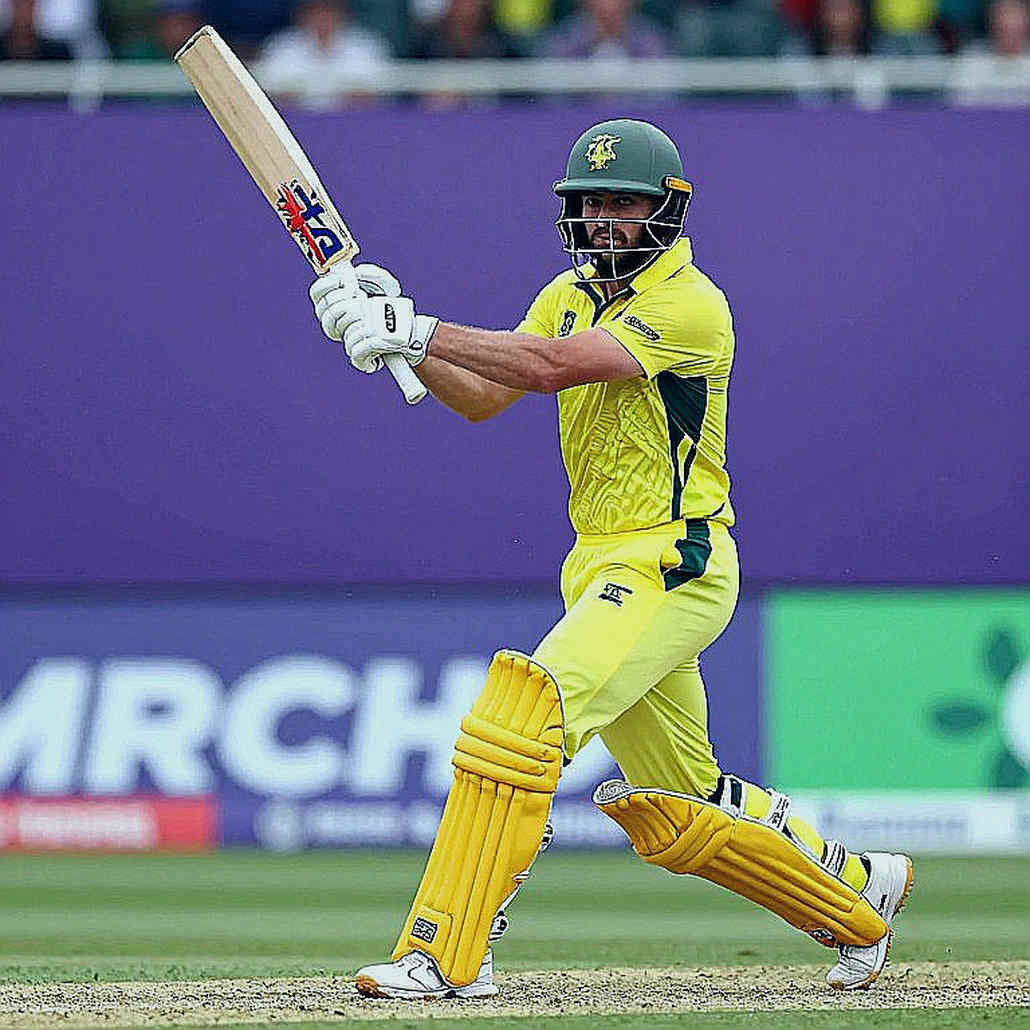
Saif Hasan, Bangladesh's left-handed top-order batter, made 71 off 48 balls for Janakpur Bolts in the Nepal Premier League. A strike rate of 147.9 is a high-quality return in T20 terms. But Janakpur lost the match. And when Saif sat down at the post-match press conference, he did not begin with his own runs. He began with disappointment.
The gist of what he said: the game was in our hands, we could have won it at any point, those two points should have been ours. Two facts emerge from that single sentence—the league operates a points system, and the match went down to the wire. What does not emerge is the margin, the target, the state of the league table, or the identity of the opposition.
The opposing team is not named anywhere. That is the first major hole in this report. Of the most basic elements of a match report—opponent, venue, date, margin of defeat—not one is present. Which means the reader cannot know under what conditions the 71 was made, what the pitch was doing, or what the team combination looked like. What we do get is one player speaking in his own words, in the naturally emotional register of a press conference.
Still, one number is checkable, and it is clear. 71 off 48 balls is roughly eight and a half runs an over. In a T20 innings where par is generally under 150, that kind of strike rate from a top-order batter can carry a team's scoring. But the team lost—which means the innings did not decide the result. In cricket analysis this is a losing-cause innings. The question is whether those 71 runs reflect his overall form in the tournament or are an outlier. That data is missing too: his aggregate runs, average and strike rate in the competition appear nowhere. A single innings cannot establish a player's form.
Saif then spoke about the league environment. In his words, the NPL is an excellent league, the organisers are very supportive, and the ground is full for every match. The praise is entirely one-directional. Nowhere in the report is there a criticism—not of logistics, not of scheduling, not of payments, not of pitches. Such praise is not unusual from a foreign player: he is a guest in a host league, and there is a courtesy obligation. But from a journalistic standpoint, one-directional praise is closer to sentiment than to information. How many spectators make a full ground, what exactly supportive means—there is no number and no example. For this reason, Saif's remarks on the league environment should be read as one player's experience rather than as an evaluation of the league.
The strongest human-interest thread in the piece is the Moeen Ali reference. Saif spoke of Moeen Bhai, who batted with him and offered advice. The report never confirms the name as Moeen Ali, only Moeen Bhai. Almost certainly this means England all-rounder Moeen Ali, since players of his standing appear in the Nepal league and batting alongside Saif in the same side is plausible. But probable and confirmed are not the same thing. Until it is verified against the team sheet or the match XI, it must remain an inference. That single name is what lifts the piece from a routine match report into a human story—a young Bangladeshi opener alongside an English international, in a mentoring role.
Yet the headline promises more than the body delivers. The headline sets up an NPL-versus-BPL comparison; the body delivers that comparison at the very end, in barely two sentences. Saif's position is studiously careful—the NPL is young, in its third season, but offers good opportunities and facilities; the BPL has completed 12 seasons and is also getting better. That is not a claim that the NPL is better than the BPL. It is a both-sides-positive answer, exactly what is expected of a contracted Bangladesh player who has no incentive to disparage his own board's flagship league.
The most analytically loaded detail in the whole piece sits right before the comparison, in parentheses: laughing. Those two words tell you the reporter asked a loaded question and the player deflected it with a smile. At a press conference, that kind of laugh usually does not mean no; it means I am not going to answer this straight. Strip out that paralinguistic marker and the meaning of the report changes. Which is why rendering this as Saif says the NPL is better than the BPL is a direct misreading. Saif did not criticise the BPL anywhere in the text; he praised both leagues, on different scales.
There is a practical reason for that diplomacy. A player contracted to the Bangladesh Cricket Board, playing abroad, carries two duties at once: he must praise the host league and remain loyal to his own. The safest way to hold that balance is to say something positive about both and issue no comparative verdict. That is precisely what Saif did. The journalistic duty is not to convert that caution into a ruling.
The season numbers need careful handling too. The NPL's third season and the BPL's 12 completed seasons both come from Saif's mouth, not from league records. They are claims, not facts. Checked against the calendar, a question arises: the NPL's inaugural franchise season was 2026, and the BPL had completed 11 editions by 2026. A third and a twelfth season therefore imply a somewhat later point in time, which does not reconcile easily. Three explanations are possible: the player is counting loosely, the reporter paraphrased, or my own season counts are wrong. Whichever it is, the two numbers should be cited as Saif said, not as background.
Another caution is warranted. One line in the report has the opposition nearly winning around the halfway point; the next has the match being in our hands until the end. The two can coexist—the game swung both ways. But the phrasing of the first is clearly a translation artefact. No analysis should be built on that sentence without the original Bengali audio or video. The translation-chain risk here is high: a Bangladeshi player, a press conference at a Nepali league, possibly an intermediate language, then a Bengali report, then an English rendering. Nicknames like Moeen Bhai survive that chain; phrases like the opposition nearly wins around the halfway point clearly do not.
So how good is the sourcing? It is a single-source report—one player, one on-the-record press conference, no scorecard reference, no league official, no opposing view, no second player's testimony. Read as a match report it is unusually thin; read as a quote transcript it is complete. The problem is that the headline presents it as a report.
The verification list is not short. From the scorecard: confirm 71 off 48, the result, the opponent, the margin and the date. From the Nepal Cricket Association or the league: confirm the NPL season number. From the BCB or the BPL: confirm the edition count. From the team sheet: confirm that Moeen Bhai is indeed Moeen Ali and that he was in the same XI. From tournament squad lists: establish how many other Bangladeshis are in the NPL and who they are. And most importantly, the exact wording of the BPL comparison must be checked against the original Bengali audio, because the entire headline hangs on a handful of sentences.
One constructive analytical angle does exist, and can be pursued carefully. Foreign franchise leagues can be an additional pathway for Bangladeshi players. In the BPL, local slots per side are limited—typically five or six—so many capable batters do not get regular first-team cricket. Abroad, they are likelier to get a guaranteed top-order role. Saif's 71 can serve as an illustration of that argument. But an illustration is not evidence. Establishing the claim requires roster data: how many Bangladeshis are in which leagues, how many balls they are facing, how many runs they are scoring. Without that, the NPL as a development outlet for Bangladeshi cricketers is a plausible proposition, not an established fact.
So what is the reliable payload here? One scorecard line—71 off 48, strike rate 147.9—and one player's diplomatic, careful, positive-on-both-sides comment. Nothing more. The headline promises a comparison for which the report contains no numbers at all: no salaries, no facilities detail, no crowd figures, no broadcast reach. Good opportunities and facilities is filler-grade language. The question of whether the NPL or the BPL is ahead cannot be answered by this report, and attempting to answer it would betray the reader rather than the headline. What can be done is to place one player's experience and one innings in their proper context—and leave the rest to the scorecard, the rosters and the original audio.
Related Players