
Sandpapergate: The Ledger That Still Doesn't Balance After Eight Years
**মূল উত্তর:** ম্যাথিউ হেইডেন বলেছেন স্যান্ডপেপারগেটে "More ধোঁয়া" আছে এবং ২০১৮ সালের সফরকারী Retired খেলোয়াড়দের কথা শোনা উচিত। মূল বিতর্ক বল ক্ষয় নিয়ে নয়, বরং কে কতটা জানত এবং তদন্তের পরিধি নিয়ে। **মূল তথ্য:** - ২৪ মার্চ ২০১৮, নিউল্যান্ডস টেস্টে ক্যামেরন ব্যানক্রফট বলের ওপর স্যান্ডপেপার ব্যবহার করেন। - শাস্তি: ব্যানক্রফট ৯ মাস, স্টিভ স্মিথ ও ডেভিড ওয়ার্নার ১২ মাস নিষিদ্ধ। - হেইডেনের যুক্তি: ফাস্ট বোলার প্রতি ডেলিভারিতে বল হাতে ধরে, তাই সম্পূর্ণ অজ্ঞতা প্রযুক্তিগতভাবে অবিশ্বাস্য। - প্যাট কামিন্স ব্যানক্রফটের অভিযোগকে "সম্পূর্ণ আজেবাজে" বলে প্রত্যাখ্যান করেছেন। - ব্যানক্রফট ওয়েস্ট অস্ট্রেলিয়ান-এ কলাম লিখে Bowling গ্রুপের আলোচনার কথা জানান। **সূত্র:** টাইমস অব ইন্ডিয়া প্রতিবেদন (ম্যাথিউ হেইডেনের বরাত), ঘটনা ২৪ মার্চ ২০১৮, কেপ টাউন টেস্ট | Cross-checked: cricsultan.com **সম্পর্কিত প্রশ্নোত্তর:** প্রশ্ন: কামিন্স কেন অভিযোগ অস্বীকার করছেন? উত্তর: তিনি ব্যানক্রফটের বর্ণনায় নাম থাকায় এটি ব্যক্তিগত ও প্রাতিষ্ঠানিক উভয় প্রতিরক্ষা। প্রশ্ন: নতুন তদন্ত হলে সবচেয়ে গুরুত্বপূর্ণ সাক্ষী কে? উত্তর: ডেভিড ওয়ার্নার, কারণ তাঁর প্রাতিষ্ঠানিক আনুগত্য ও বাণিজ্যিক ঝুঁকি সবচেয়ে কম। প্রশ্ন: ক্রিকেট অস্ট্রেলিয়ার সম্ভাব্য পদক্ষেপ কী? উত্তর: সংকীর্ণ পরিধির আইনজীবী-নেতৃত্বাধীন পর্যালোচনা, প্রকাশ্য শুনানি নয়।
Cape Town, March 2026. The Newlands pitch was dry and abrasive, the breeze blowing across it. Third day of the Test, the ball past forty overs — exactly when the real weapon should come into play. Reverse swing. The television camera caught a single frame: Cameron Bancroft, sandpaper on the ball. That one frame has remained the only visible "evidence" of this scandal for eight years.
Ball science does not work in single frames. Reverse swing does not arrive in one delivery. One side of the ball must stay rough, the other polished; that asymmetry has to be maintained over after over, from fielder's hand to bowler's hand to wicketkeeper's gloves. If the offence happened, it happened across several overs, not in one second. The camera caught a moment, but the incident's window of exposure was far larger. Nobody ever modelled that window. The ledger went quiet there, even as the Newlands breeze said something else.
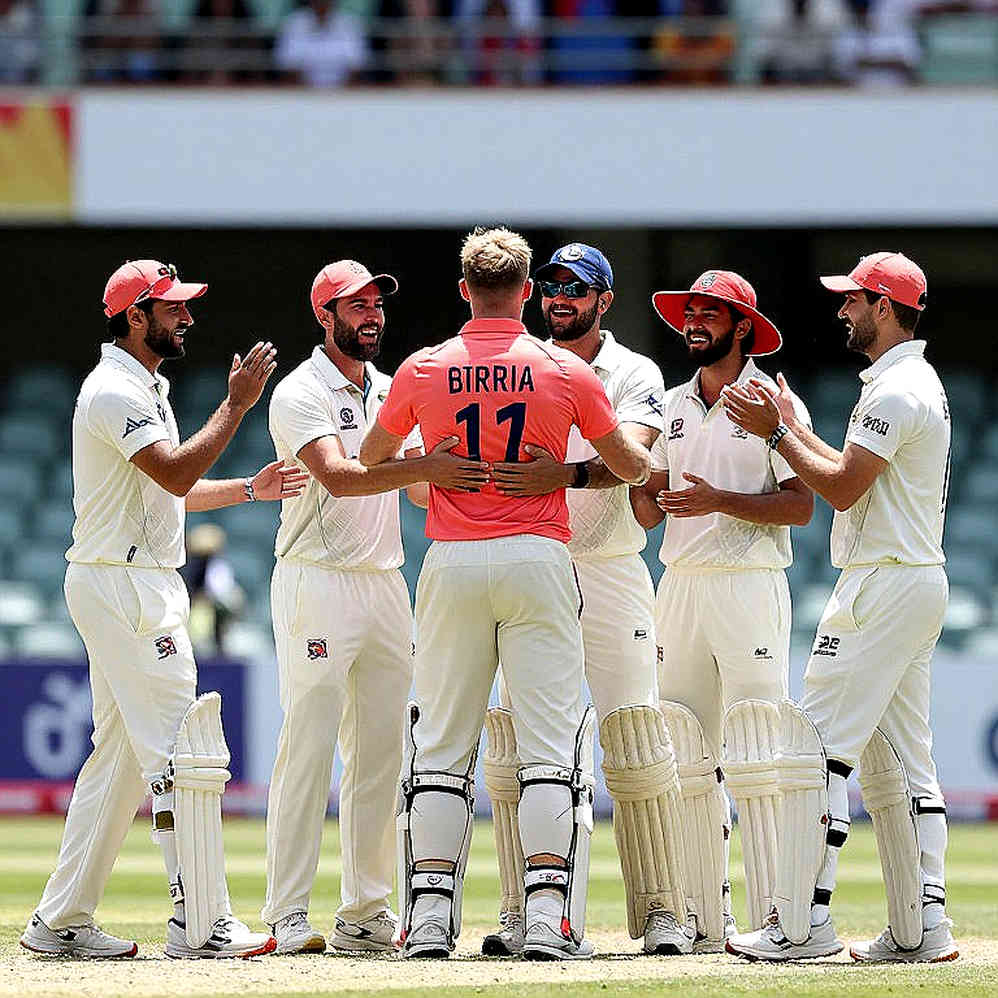
Eight years on, the story has returned not because of new footage but because of a new information channel. Bancroft wrote in The West Australian; Usman Khawaja questioned the breadth of dressing-room knowledge; Matthew Hayden said on television that there is "more smoke" and that Australia should hear the 2026 tourists out, including retired players. The question these three voices raise is not whether the ball was damaged. That was settled long ago. The question is who knew, how much, and why the investigation stopped where it did.
It matters that this is structurally a Test-match story. Test cricket is the only format where the condition of the ball is a legitimate, match-defining skill across eighty overs. A new ball swings a few degrees per over; an old ball rough on one side reverses almost the other way. In T20 the ball is changed and the overs are few, so the market value of ball maintenance is close to zero. The largest reward for ball-conditioning sits in Test cricket. Transposing this integrity debate onto franchise cricket would be a category error.
Newlands was the ideal stage for that crisis. Dry, abrasive surface; sea breeze; a ground whose second innings habitually offers reverse swing. The incident happened at the venue where altering the ball yields the highest tactical return — possibly coincidence, but technically coherent.
The series mood belongs in the ledger too. Australia's 2026 tour of South Africa was among their most hostile: sledging, on-field friction, two dressing rooms talking at each other. In Ashes-type environments, "hard" behaviour has long been licensed as professionalism. That culture is part of the explanation, not an excuse.
Sanctions came: Bancroft nine months, Smith and Warner twelve. What followed was the cleanest redemption arc in Australian cricket history — a T20 World Cup, the inaugural World Test Championship, an ODI World Cup, the Ashes retained in England. On the field, the 2026 debt was repaid long ago.
Yet the accounts still do not balance, because there are two ledgers. The on-field one and the integrity one. The first has been filled; the second was never closed, only suppressed. Success masked the problem rather than resolving it. That is the central paradox of this story.
Hayden's role needs precision. 103 Tests, roughly 8,600 runs, an average near 50.7, about 30 centuries — playing credibility beyond question. But playing credibility is not investigative authority. He was a teammate and is now a media voice. Treat his statements as high-reach, low-evidentiary opinion. Still, he has one argument that is the strongest technical point in the whole debate, and it is not evidence — it is mechanics.
The argument is simple: the fast bowler is the only player who physically holds the ball every delivery, decides which side to shine, reads its condition to judge the switch to reverse. Hayden compared it to a bat — a batter knows his own bat, a bowler knows his own ball. The claim that the bowling group was wholly unaware is technically implausible in Test cricket. Years of watching have taught me this: the bowler operating with an old ball checks it with his fingers, his eyes, every single over.
Bancroft's column supports that point from a different direction. In his account, conversations happened with the bowling group, the objective was generating reverse swing, and the team environment encouraged it. In the accused's own words, the offence was a collective project, not a solo act.
Khawaja's question is more uncomfortable. He asked where the limits of dressing-room knowledge actually lay. That is not an accusation, but it is not nothing either. When a senior batter asks it, the story stops being media and becomes dressing-room politics.
Cummins' response was categorical — "utter nonsense". He is named in Bancroft's account, so his answer is both personal defence and institutional defence.
Two levels of knowledge must be separated here, and this separation is the most important analytical work in the story. One: the bowler knew the ball was being damaged. Two: the bowler knew sandpaper was the method. The first is technically near-inevitable — the man holding the ball would feel the difference. The second is not. A bowler can benefit from a rough ball without knowing the specific tool. That gap is the strongest ground under Cummins' denial, and it is exactly where Hayden's bat analogy overruns. The analogy is strong rhetoric and loose reasoning: it fuses two different levels of knowledge.
The second implausibility is the single-actor frame. Ball maintenance in Test cricket is distributed by convention across the bowler, the wicketkeeper, the captain and close fielders. Three players were punished; cricket mechanics suggest at least one more pair of eyes.
One detail keeps the case toxic: the choice of method. The traditional improvised routes were bottle caps, mints, sunscreen, fingernails, throwing the ball into the rough — opportunistic, whatever is at hand. Sandpaper is the opposite: a coarse, deliberately prepared abrasive. That implies premeditation. Premeditation aggravates the penalty, and that is why the file is still open eight years later.
So why now? Because this is a trigger, not a cause. The 2026 cohort is at the edge of retirement — Smith, Khawaja, Cummins; some past it, some at the last bend. Central contracts, leadership roles and media obligations once acted as institutional discipline that suppressed public dissent. Retirement removes that discipline. It explains why Hayden explicitly named retired tourists.
The second trigger is technological, and it is a real shift in cricket governance. The player is now a publisher. Newspaper columns, podcasts, autobiographies operate outside board control. Bancroft's column is a primary source that forced the story back into the cycle independently. New media taught me that a chart is a sentence, not a verdict. A column is a source, not a final ruling. But the source is enough, because it breaks the board's monopoly on the historical record.
In 2026, when stadiums emptied, I worked through 83 matches and found home win rates falling from 43.3% to 33.3%, home xG down 0.22 per match. That taught me a number is hollow without context. The same thing happened here: one frame became an eight-year story, and the frame is as hollow as a bare number, because nobody counted the forty overs before it.
Warner's position is the most important variable. He carried the heaviest sanction, has the least institutional loyalty to Cricket Australia, sits outside the central-contract system, and now earns from franchise demand driven by visibility rather than historical integrity. His commercial cost of speaking is close to zero; his incentive is the highest in the room. If a formal process opens, the likeliest new fracture is his testimony.
Cricket Australia's instinct will be containment, not reopening. A fresh inquiry means re-examining the methodology of the 2026 investigation, and that could implicate administrators, not only players. If any process opens, expect a narrow, lawyer-led review rather than a public hearing. Boards prefer controlled disclosure.
This is where Australia's case stops being a local embarrassment and becomes a precedent. When a Big Three board faces a transparency test, its conduct sets an implicit standard for smaller boards. Whether it is Bangladesh or anyone else, the question will return: investigated how, with whose testimony, and why the players themselves had to force it into the open.
The counter-argument must be stated honestly. Hayden's authority is narrative, not forensic. He was a teammate; he holds no evidence, only long-range media reach. Part of his intervention may be protection of the 2026 cohort as a group — converting an open-ended public accusation into a bounded, procedural inquiry is a familiar defence manoeuvre dressed as transparency. Bancroft's motivation is equally ambiguous: his Test career never consolidated, and a truth-telling motive can coexist with a rehabilitation motive. Neither invalidates him.
The largest risk sits on Cummins. Current captain, Australia's most commercially valuable face — a categorical denial is a high-stakes commitment. If corroboration emerges later, the cost is institutional, not merely personal: captaincy, commercial portfolio, authority over the team.
The monk prays for patterns; the trader in me bets on the next minute. The pattern here is clear. Whether the ball was scuffed is no longer the question. The question is whether a board can be forced to reopen a closed file by its own players' publishing power. What to watch over the next four to six months: whether a formal process opens, how narrow its scope is, whether Warner testifies, and whether the Hayden-Khawaja alignment creates dressing-room friction with the current captain.

Related Players